
Cold district heating and district management
District heating Dollnstein
Germany's first cold district heating network – implemented with SiMonIn 2013, Dollnstein required predictive control and optimization for which no standard software existed. xNet developed SiMon in response to this need.
The starting point
A visionary energy concept without suitable standard software
As early as 2013, the cold district heating network in Dollnstein connected multiple energy sources and numerous consumers in a technically demanding overall system. Generation and distribution had to be coordinated according to demand, electrical and thermal energy considered together, and every transfer station included in operations.
Available products could not implement the required predictive control and optimization strategies. xNet therefore developed its own freely adaptable platform: SiMon.
The system scope
Multiple generators, one network and centrally managed consumers
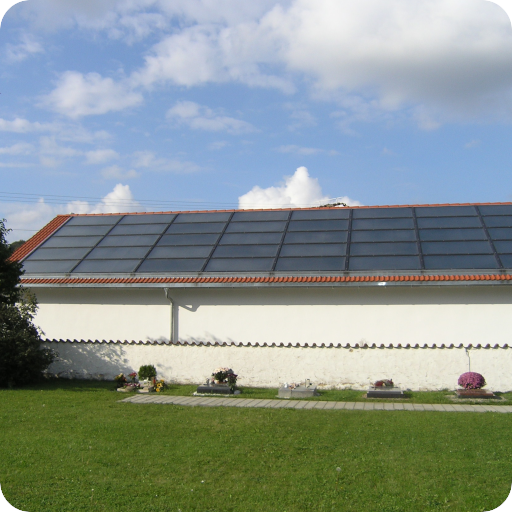
Groundwater and solar thermal
CHP, heat pump and PV
SiMon
Cold district heating network
Transfer stations and consumers
SiMon connects central generation with thermal distribution and the ratiotherm transfer stations. Consumption data, plant states and available electricity generation feed into central load management.
The implementation
A new software platform for a new form of heat supply
Model the control requirements
The thermal and electrical relationships of the novel network were represented in a shared automation and optimization system.
Connect generators intelligently
CHP, heat pump, groundwater, solar thermal and PV power were combined in a demand-oriented operating strategy.
Integrate consumers
All connected consumers and transfer stations were fully integrated into central load management.
Centralize operations
Equipment management, consumption recording and technical fault management were combined in SiMon.
The SiMon solution
Control predictively, learn from operating data, coordinate loads
Control strategy
Align generation with actual demand
Predictive control strategies coordinate central generation precisely and according to heat demand across the network.
Adaptive logic
Include operating behavior in optimization
Self-learning algorithms use operating data to continuously improve the interaction between generation, distribution and consumption.
Load management
Connect thermal output and power generation
Central load management considers electricity generation alongside heat demand and coordinates all connected consumers.
Results and customer value
A manageable network with a high share of renewable energy
Demand-oriented operation
The energy center generates and distributes thermal output according to the actual demand of connected consumers.
Central transparency
Consumption recording, plant management and fault management are available in one shared technical platform.
Significantly lower CO₂
External publications report CO₂ savings of approximately 68 to 70 percent for the energy concept.
Dollnstein demonstrated early on that cold district heating, sector coupling and data-driven automation can work not only as a concept, but in municipal operation.
Recognition and technical sources
Documented as environmental innovation and municipal best practice
The intelligent district heating network was recognized as a KUMAS flagship project and published as a municipal climate protection case study. ratiotherm's project description explains the cold district heating concept and integrated transfer stations.